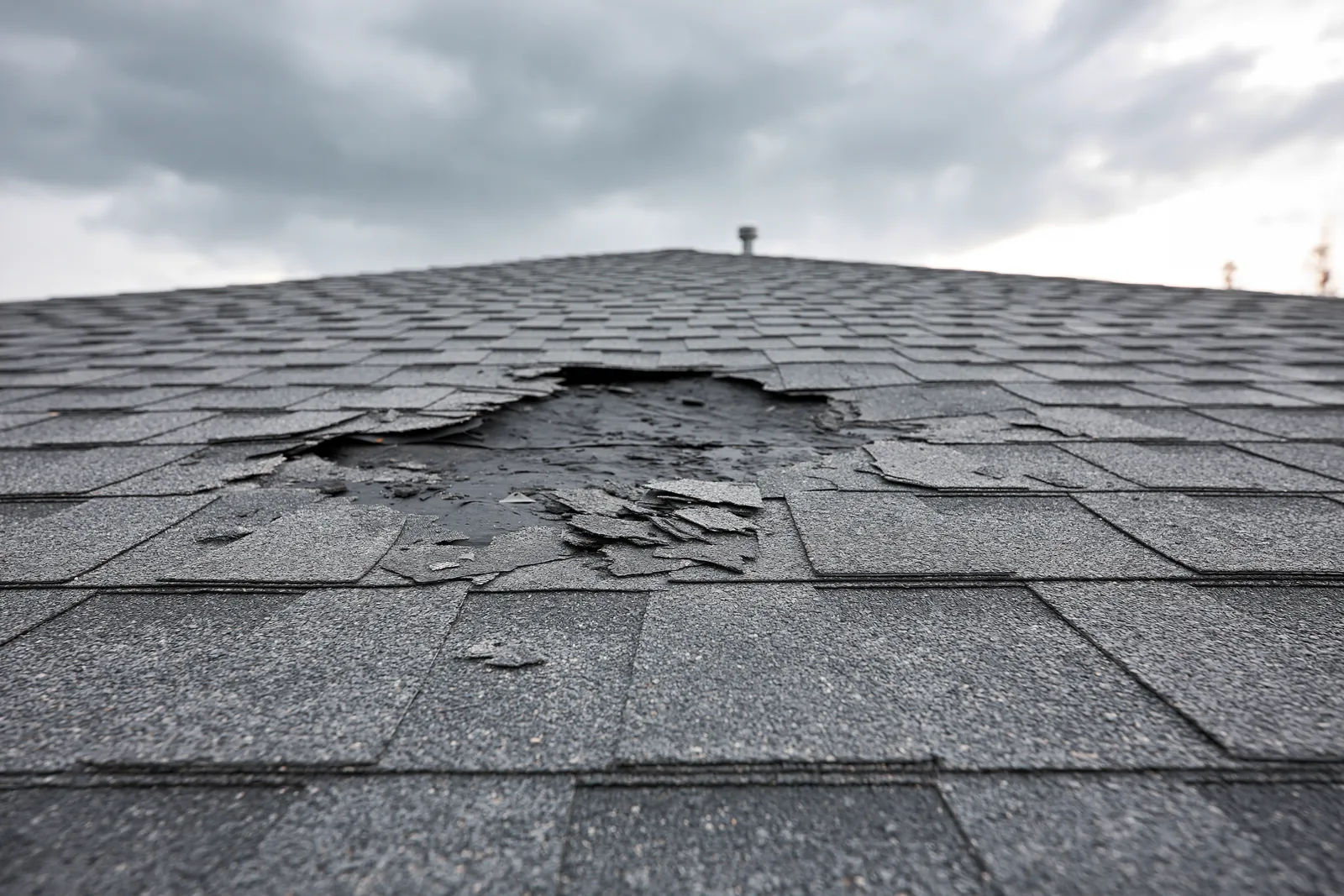
Hail is not hypothetical here. The federal storm record shows golf-ball stones over Mesquite in June 2023, ping-pong hail in April 2024, and an 81 mph gust clocked in town in April 2025, all inside a Dallas County log that runs twenty-three hail days deep in four years. So the question is not whether another round comes; it is what to do in the week after it does. Here is that week, in order, with the panic removed.
Day one: read the ground, not the roof
Stay off the ladder. The useful first evidence is at eye level: dents in gutters and downspouts, pocked window screens, chipped paint on the AC cabinet, shingle grit collected at the downspout mouths, dings on the car that stayed outside. None of it proves roof damage, but together it sketches how hard your street was actually hit.
Take phone photos of whatever you find and note the storm date. Two minutes of amateur documentation now gives any later claim a timeline that adjusters respect.
The week after: get eyes on the shingles
Hail damage works on a delay. A strike crushes the shingle's protective surface into the mat underneath, a wound that does not leak that afternoon but widens through the freeze-and-bake cycles that follow. From the yard the roof looks unchanged, which is why a close-up, slope-by-slope inspection is the only reliable verdict, and why it should happen while the evidence is fresh rather than a year later when the first stain appears.
A proper storm inspection is free, produces dated photos you keep, and lands on one of two useful conclusions: damage worth documenting for a claim, or a clean roof and a useful baseline file. Both are good outcomes.
The yard-sign week: what to walk away from
Big hail brings a bloom of out-of-town yard signs, and most of the bad outcomes in storm roofing start with a knock on the door. The tells are consistent: pressure to sign today, an offer to handle your deductible, vagueness about a local address, and inspections that produce urgency but no photographs.
The deductible offer deserves special mention because Texas made it a crime in 2019: a contractor may not waive, absorb, or rebate an insurance deductible, full stop. Anyone leading with that pitch has told you how they treat rules generally. A local roofer with dated photos, a written scope, and no rush will still be here when the storm-chaser tags expire.
- Keep: dated photos, written scopes, local addresses, patience
- Walk away from: deductible offers, sign-today pressure, photo-free damage claims
The claim decision, made like a decision
With the photo file in hand, the claim question becomes ordinary arithmetic instead of a leap of faith. Real, documented damage that exceeds your deductible comfortably is worth filing promptly, and your policy likely expects prompt notice, often within about a year. Minor damage below or near the deductible is usually better handled as a small repair, keeping your claims history clean.
If you do file, your roofer should meet the adjuster on the roof so both are pricing the same evidence. From there the job runs like any other: scope approved, roof restored to spec, workmanship in writing. The full sequence lives in the storm guide.
If hail crossed your part of Mesquite recently, the documented look is free and the photos are yours either way. Reach out through the contact page to get it scheduled this week. Call (972) 284-7124